
Breaking Down the Policy Platform: The Green New Deal
The Green New Deal is a framework for a government agenda that outlines how large-scale public investment can strengthen the economy while addressing the climate crisis.
It centers on sustained federal investment to support a cleaner, more equitable economy while addressing interconnected challenges, including climate change, economic insecurity, and racial injustice.
Rather than a single piece of legislation, the Green New Deal outlines a public policy approach emphasizing community-led development, public goods, and long-term economic resilience. It prioritizes investment in people and places that have historically been under-resourced, while supporting the creation of millions of good-paying jobs across sectors such as clean energy, care work, manufacturing, and infrastructure.
Across the country, communities are already experiencing overlapping crises — from extreme weather events and energy system failures to rising housing costs and economic instability. These challenges are large-scale and often compound one another, underscoring the need for coordinated, comprehensive public responses.
The Green New Deal provides a framework for understanding how federal policy can respond to these realities through sustained investment, democratic governance, and a focus on long-term public benefit.
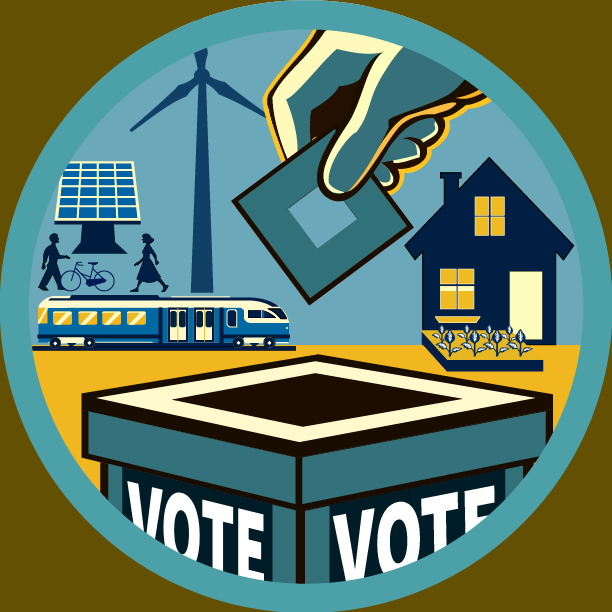
Avert the climate crisis by rapidly transitioning away from polluting energy sources to sustainable alternatives, once and for all ending our reliance on fossil fuels.
- End all fossil fuel subsidies, immediately.
- The US Government spends ~ $20 billion on subsidies for the fossil fuel industry every year, handing them extra cash to destroy our futures.
- No new future fossil fuel projects.
- The science is clear: extracting and burning fossil fuels is worsening the climate, and we must stop immediately.
- Phase out all existing fossil fuel projects by 2035.
- Fund a just transition for workers in fossil fuel industries.
Create millions of good-paying jobs in the clean energy sector, providing fair opportunities for current fossil fuel industry workers, and a permanent public jobs guarantee for vital infrastructure work.
- Invest like our future depends on it.
- We spend nearly $1 trillion yearly on weapons of war, when our biggest national security threat is climate change.
- We should spend at least that much yearly on the jobs and infrastructure necessary to support our transition away from fossil fuels.
- Federal Jobs Guarantee
- There are countless jobs to be done to avert climate crisis, enough that anybody who wants a job could have one. So let’s guarantee that they can, and fund the completion of all of that work.
Heal the environmental damage wrought by the dirty energy economy, paying special attention to the disproportionate impact on poor and marginalized communities and countries.
- Bolster and support communities on the frontlines of the crisis.
- Ensure that 40% of all climate spending benefits frontline communities
- Offer jobs done in frontline communities to members of those communities first.
Foster international collaboration to address climate change, recognizing the disproportionate responsibilities of wealthy colonial powers and the disproportionate impact Equatorial and low-lying countries are already facing today
- Contribute proportional investments to our impact.
- The first countries to industrialize have contributed the lion’s share of pollution and climate emissions.
- We should be the first to decarbonize, and ensure supportive resources to countries disproportionately affected.
- Respect Indigenous Sovereignty
- Fully honor treaties with Indigenous nations.
- Stop building fossil fuel infrastructure through or impacting Indigenous land, water, and air, against their governing consent.
Reshape our economy to serve the people, not profit, ensuring environmental sustainability and democratic values by lifting the chokehold of corporate influence on our government.
- For the people, not for the profits.
- We have built an economy and a society that respects the “right” of billionaires and corporation to make endless profits, but not the rights of working people to a dignified wage. It’s time we reversed that.
- End corporate corruption
- The Citizens United ruling allowed our government to be sold to the highest bidder, and corporate corruption rises with each election. We must overturn Citizens United and greatly curtail the ability of corporations to meddle in our elections.
- Divest from death; invest in the future.
- We spend a nearly a trillion dollars on the militaary. Cities spend 25%-40% of their budget on policing. What if instead of weapons of war and prisons, we spent our government dollars investing in averting the climate crisis and making every community in America a better place to live?
Embark on a society-wide mobilization to combat the climate crisis, transforming every sector: from energy to agriculture, from housing to transportation, and more, building a sustainable and equitable future.
- Unleash the full force of government on the climate crisis.
- Pass Green New Deal legislation at all levels of government: federal, state, and local. It’s going to take all government entities working hand in hand with the communities they represent to shepherd such a massive transition in our society
- Declare a Climate Emergency. In 1933, Roosevelt declared a national emergency to respond to the Great Depression. President Biden should do the same to respond to the climate crisis.
- Treat the Climate Crisis like the cross-sectoral crisis it is.
- Every bill of the Green New Deal era should account for the climate impacts
- Every sector of society should be factored in to our ability to respond to the climate crisis.

An Intersection of Crises
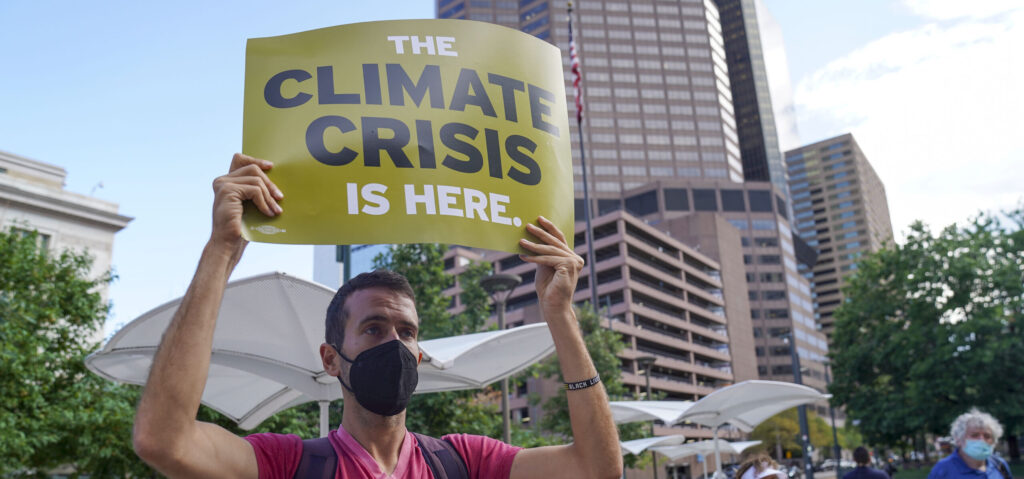
The climate crisis is one of several overlapping challenges shaping life in the United States in the 21st century. Together, these dynamics affect economic stability, public health, and democratic institutions.
- Economic volatility: Two major recessions in the past 15 years have resulted in widespread job loss and housing instability. During the same period, wage growth has largely stagnated, leaving many working families facing ongoing financial strain.
- Housing affordability: The cost of housing — whether renting or buying — has continued to rise nationwide, increasing financial pressure on households and limiting access to stable shelter.
- Aging systems and care gaps: Decades of disinvestment have contributed to an aging population with insufficient access to retirement security and caregiving infrastructure, while the U.S. healthcare system continues to lag behind other nations with comparable wealth.
- Democratic backsliding: In many parts of the country, previously established racial justice gains have been weakened through policy changes, redistricting practices, and voting restrictions that affect political representation and participation.
More Detailed Information about the Green New Deal
To support a broader understanding of this transformative policy framework and its far-reaching implications, the Green New Deal Network developed a series of detailed background materials exploring key aspects of the climate crisis and the Green New Deal. These essays were intended to serve as a rich source of information, offering context and analysis on how comprehensive approaches to climate, economic, and social challenges were being advanced at the time.
It’s essential to understand the roots and ramifications of the climate crisis. It’s not just about rising temperatures and extreme weather; it’s a crisis that intersects with social, economic, and political dimensions. Grasping the full spectrum of the climate crisis is crucial for comprehending why comprehensive solutions like the Green New Deal are necessary and timely.
-
- What is the climate crisis?
-
- What are the causes of the climate crisis?
-
- What will it take to avert the climate crisis?
-
- What is environmental racism?
The Green New Deal is an ambitious blueprint for change, encompassing a broad range of sectors that are pivotal to our society and economy. understanding the details of these sectors reveals the comprehensive nature of the Green New Deal and its potential to drive profound and positive change. These sectors represent the pillars of our society and economy; transforming them is essential for a future that is both environmentally sustainable and socially just.
- Federal Jobs Program/Guarantee (including training/education)
- Energy and Power
- Buildings and Housing
- Transportation
- Food and Agriculture
- Industry reform
- Pollution reduction and cleanup
- Natural disaster response (Civilian Climate Corps
At the heart of the Green New Deal are critical considerations that transcend traditional policy categories. Social justice, economic equity, and inclusivity are not peripheral issues; they are central to the design and success of the Green New Deal. Acknowledging and addressing these considerations is essential to ensure that the solutions we pursue are just, effective, and sustainable.
- Job Creation
- Racial justice
- Disability Justice
- Indigenous Sovereignty
- Our Obligation to Future Generations
- Regional interests (urban vs suburban vs rural)
- Avoiding false solutions (those that reinforce the extractive economy, harm local communities, or fail to actually reduce emissions)
The Green New Deal reaches into areas that might initially seem unrelated to environmental policy, yet they are crucial to its success. Understanding this interconnectedness is key to realizing the comprehensive vision of the Green New Deal.
- Healthcare
- Policing
- Immigration
- Demilitarization
- Automation
- Cost of Living
- Shorter work hours